
-1.webp)
You fall asleep fine. Then something pulls you awake around midnight. Your chest is tight, you're coughing, and you're reaching for your inhaler in the dark. If nocturnal asthma symptoms keep interrupting your sleep, you are not imagining it, and you are not alone. There is a real, predictable reason your body does this at night. Understanding it can help you stop dreading bedtime.
What's Actually Happening in Your Body Between Midnight and 4 AM
Your body runs on a 24-hour internal clock. Several of its rhythms work against your airways during the early morning hours.
Cortisol helps keep airway inflammation low and airways open. After midnight, cortisol levels drop to their lowest point. The natural dip in cortisol levels is associated with increased airway sensitivity during sleep hours. Your airways become more reactive to irritants.
At the same time, your body releases more histamine overnight. Histamine tightens airways. It also slows the movement of mucus. That combination is why nighttime asthma coughing often feels thick and hard to clear.
Research suggests your body is doing something entirely predictable here. The timing is not random. It falls during the hours when your body's natural protection against airway inflammation is at its weakest.
This is also why asthma symptoms often worsen after dark, which is such a common question. The biology is consistent across most people with asthma.
-1.webp)
Three Physical Factors That Make Lying Down Harder on Your Lungs
Your posture during sleep changes how your lungs work. Supine posture (lying flat on your back) tends to coincide with reduced lung volume and may be associated with increased nighttime symptoms.
Here is what shifts when you lie down:
- Gravity no longer helps your diaphragm. When you stand, gravity pulls your abdominal organs down and away from your lungs. Lying flat reverses that. Your lungs have less room to expand.
- Mucus pools differently. Upright, mucus drains. Flat, it collects at the back of your throat and airway. This can trigger coughing and a sense of tightness.
- Airway diameter narrows slightly. Even in healthy people, airways are a little narrower at night. For someone with asthma, that small change matters a lot.
Sleeping on your side or with your head slightly elevated may help. It does not fix the underlying inflammation, but it can reduce how much posture adds to the problem.
Environmental Factors in Your Bedroom That Tend to Coincide With Flares
Your bedroom may be working against you. Several common bedroom conditions are associated with nighttime symptom patterns in people with asthma.
Dust mite exposure is associated with nighttime symptom patterns in some people with asthma. Dust mites live in mattresses, pillows, and bedding. You spend six to eight hours pressed against those surfaces every night.
Other common bedroom factors include:
- Pet dander (especially if a pet sleeps on or near your bed)
- Mold in humid rooms or near air conditioning units
- Dry air, which can irritate the airways directly
- Scented candles, air fresheners, or fabric softeners used on bedding
HEPA filtration is associated with reduced airborne allergen levels, which some research suggests may support better nighttime breathing. Allergen-proof mattress and pillow covers are another low-cost step worth trying.
Keep your bedroom cool and well-ventilated. Warm, humid air tends to carry more allergens and irritants.
How to Use Morning Peak Flow Readings to Spot a Nocturnal Pattern
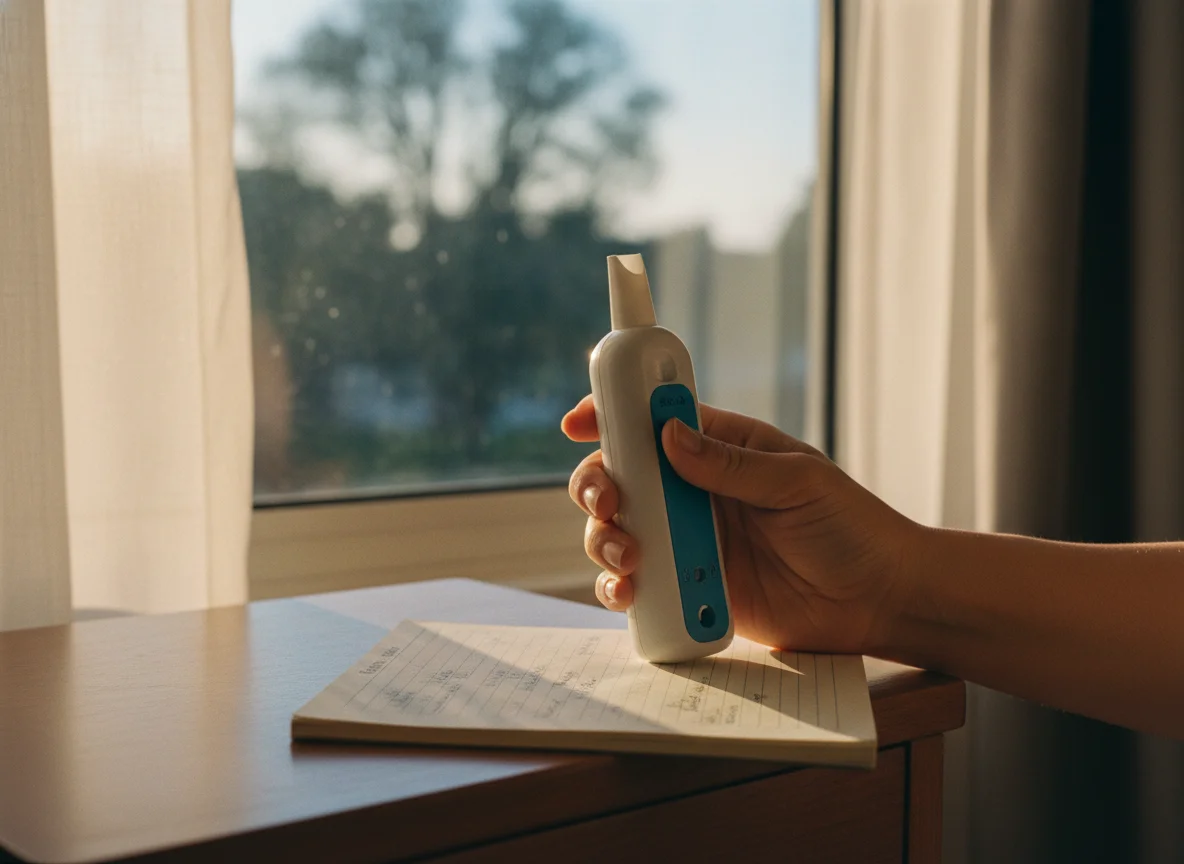
This is one of the most practical things you can do. Your morning peak flow reading is a direct window into what happened to your airways overnight.
Peak flow naturally dips during the night. A drop of more than 20 percent from your personal best is a recognized sign of poorly controlled asthma. Many people do not realize their nighttime symptoms are part of a pattern until they start tracking morning numbers consistently.
Here is a simple routine to start:
- Keep your peak flow meter on your nightstand.
- Take a reading within five minutes of waking, before any medication.
- Log the number every day, including how you slept and any symptoms you noticed.
- After two weeks, look for a pattern. Do your lowest readings follow your worst nights?
Learning how to read your morning peak flow numbers gives you real data to bring to your doctor. Guessing is replaced by evidence.
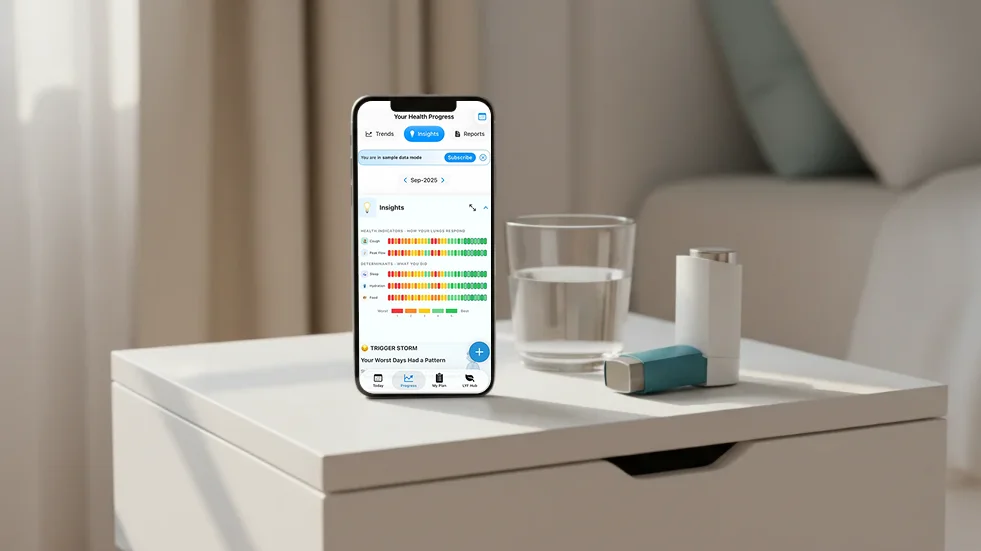
Respire LYF logs your morning peak flow alongside sleep data so you can spot patterns over time and share them with your doctor. It connects your overnight sleep quality to your peak flow trends, making it easier to identify which nights may be linked to your breathing patterns.
When Nighttime Breathing Problems Mean You Should Call Your Doctor
Not every bad night is an emergency. But some signs mean you should not wait until morning.
Call your doctor or seek care if your nighttime symptoms are happening more than twice a week. That frequency is a clinical marker for uncontrolled asthma. Your current treatment plan may need to be adjusted.
Also, contact your doctor if:
- Your rescue inhaler stops giving you relief within 20 minutes
- You wake up gasping more than once in the same night
- Your morning peak flow stays below 80 percent of your personal best for several days in a row
- You feel short of breath even after using your inhaler
These are signs that your asthma is not well-managed overnight. A doctor can review your medication, check for acid reflux (which often worsens nighttime symptoms), and rule out other conditions like sleep apnea.
When to Call Emergency Services
Seek emergency care immediately if you cannot speak in full sentences due to breathlessness. Other urgent warning signs include lips or fingernails turning blue or gray, a peak flow reading below 50 percent of your personal best, or no improvement after two doses of your rescue inhaler. If your chest feels so tight that breathing takes visible effort, do not wait. Call 911 or go to the nearest emergency room. Nocturnal asthma symptoms that reach this level are a medical emergency, not something to manage alone at home.
Track What's Actually Affecting Your Breathing
Nocturnal asthma symptoms follow patterns. The sooner you find your pattern, the sooner you and your doctor can do something about it.
Start with your morning peak flow. Add notes about your bedroom environment. Track which nights you wake up and which nights you sleep through. Over a few weeks, the picture becomes clear.
Respire LYF makes this easier. Log your peak flow, sleep quality, and how your breathing felt each morning in one place. Respire LYF compiles that into a monthly report so when you see your doctor, you arrive with weeks of real breathing data to show, not just a memory of bad nights.
[Download Free on the App Store →]
This article is for informational purposes only and does not constitute medical advice. Always consult your doctor or healthcare professional before making changes to your asthma or COPD management.