

Inhaler
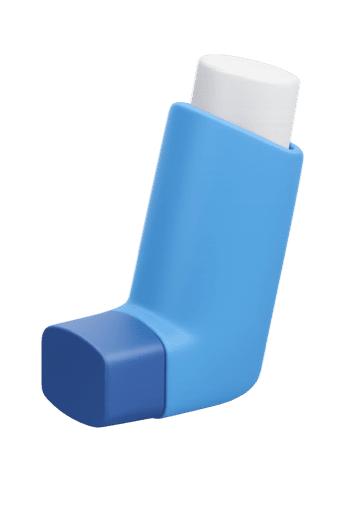
How to Use a Metered Dose Inhaler Correctly
Think you already know how to use an inhaler? Most adults have at least one technique mistake. Here are the steps that actually get medication into your lungs.
 By Respire LYF6 min read
In this article

You shake it, press it, breathe in, and hope for the best. If that sounds familiar, you are not alone. Most adults who rely on an inhaler every day were never properly shown how to use an inhaler. A quick demo at the pharmacy counter, a folded paper insert, and then you were on your own. The result is that a large portion of people with asthma or COPD are getting far less medication into their lungs than they should be.
This is not a personal failing. It is a gap in how inhaler education gets delivered. The good news is that the technique is completely fixable.
Why Your Inhaler Might Not Be Working as Well as You Think
Research consistently shows that poor inhaler technique is one of the most common reasons people feel like their medication has stopped working.
The medication does not get a second chance. If it hits the back of your throat instead of traveling into your airways, it does not work. You may end up taking more puffs, feeling frustrated, or assuming your prescription needs to change.
Checking your technique is worth doing alongside any conversation with your doctor about your medication.
Metered Dose Inhaler Steps: What the Instructions Leave Out
The package insert gives you the basics. Here is what it tends to skip.
- Shake the inhaler for at least 5 seconds. The propellant and medication separate when the inhaler sits still. Skipping this step means the first puff may be mostly propellant.
- Breathe out fully before you press. Most people take a normal breath out. You want to empty your lungs as much as feels comfortable. This creates more room for the medication to travel deep.
- Start inhaling before you press the canister. There is a small but important timing window. If you press first and then inhale, the medication cloud has already started to disperse.
- Inhale slowly and steadily. This is the step most people get wrong. A fast, forceful breath causes the medication to impact the back of your throat. A slow, controlled breath pulls it deeper into your airways.
- Hold your breath for up to 10 seconds. Research suggests a 10-second breath hold may be associated with better medication deposition in the lungs. Even 5 seconds is better than none.
- Wait 30 to 60 seconds before a second puff. If your doctor prescribed two puffs, give the first one time to open the airways slightly before the second follows.
The single most common error is inhaling too fast. A slow, steady breath is the step that tends to coincide with improved delivery in clinical observations.

How to Use an Inhaler With a Spacer (And Why Adults Skip It)
A spacer is a small plastic tube that attaches between your inhaler and your mouth. Many adults skip it because it feels like a step backward, something for children or people who cannot coordinate their breathing.
That thinking is worth reconsidering.
Research suggests that more medication may reach the lungs when a spacer is used correctly, compared to using a metered dose inhaler alone.
The spacer holds the medication cloud for a moment, so the timing pressure of "press and inhale at the same time" is removed. You press, the cloud fills the chamber, and then you inhale at your own pace.
Spacers are especially useful if you have ever felt like your inhaler is not working properly. They are available over the counter at most pharmacies and cost very little.
To use one:
- Attach the spacer to your inhaler.
- Shake the inhaler as normal.
- Press the canister once to release one puff into the spacer.
- Place your lips around the mouthpiece and inhale slowly.
- Hold your breath for up to 10 seconds.
- Breathe out and repeat for a second puff if prescribed.
The 3 Technique Mistakes Adults Make Most Often
These are the errors that respiratory therapists see again and again.
Mistake 1: Tilting the head down. Your chin should be slightly lifted, not tucked. A neutral or slightly raised head position keeps your airway more open.
Mistake 2: Not exhaling fully before inhaling. It feels unnatural to breathe all the way out before you use your inhaler. But starting from a fuller exhale gives the medication more room to travel.
Mistake 3: Stopping the inhale when you press. Some people instinctively pause their breath at the moment of actuation. Keep inhaling through the press. Do not stop.
If you are unsure whether you are making any of these errors, ask your pharmacist or respiratory therapist to watch you use your inhaler. Most are happy to do a quick check. You can also look into whether your symptoms follow patterns you have not noticed yet. If you find yourself wondering why asthma symptoms often get worse at night, technique alone may not be the full picture.

When to See a Doctor
If your symptoms are worsening despite using your inhaler correctly, or you are reaching for your rescue inhaler more than twice a week, contact your healthcare provider. These may be signs that your current treatment plan needs adjustment. Do not rely on technique fixes alone if something feels off; your doctor needs to know.
Track What's Actually Affecting Your Breathing
Fixing your technique is the right first step. But even perfect technique can't tell you why Tuesday was a bad breathing day, and Friday wasn't. That gap, between what you do and what your lungs experience, is where most self-management breaks down.
Respire LYF monitors your inhaler use through your Apple Watch and gives you real-time feedback on your technique, noticing when something is off and nudging you back in the moment, before the habit becomes invisible. Over time, it correlates your inhaler use with nine other factors that actually drive your breathing, sleep, stress, food, hydration, environment, and more, building a picture of your personal patterns that no single data point could reveal alone.
You stop guessing. You start seeing.

Small Changes, Real Difference
You now know the steps most people skip. You know why a spacer is worth trying. And you know the three mistakes that quietly reduce how well your medication works.
Correct inhaler technique is associated with better symptom control in research studies.
That is not a small thing. It may be the most impactful change you make this week, and it costs nothing.
Start with your next dose. Slow down the inhale. Breathe all the way out first. Hold for 10 seconds. See if it feels different.
This article is for informational purposes only and does not constitute medical advice. Always consult your doctor or healthcare professional before making changes to your asthma or COPD management.

 Inhaler