

You have checked your pollen count, swapped your cleaning products, and kept your inhaler close. Yet your breathing still feels tighter than it should. One of the most overlooked contributing factors in asthma is hiding in plain sight, and it has nothing to do with dust or pets. It is simply how much water you drank today.
Nobody tells you this at your first asthma appointment. That is not a failure on your part. It is a gap in how asthma education is usually delivered. Let us fix that now.
Why Your Asthma Checklist Might Be Missing the Obvious
Most asthma checklists focus on the usual suspects. Pollen, mold, smoke, pet dander, and cold air all deserve their spots on that list. But fluid intake rarely makes the cut, even though research suggests a relationship between hydration and airway mucus consistency.
Think about the last time a doctor asked how much water you drink each day. For most people, that question never comes up in an asthma visit. So the habit slips, especially on busy days or hot afternoons.
You can also explore how foods that trigger asthma interact with your overall symptom picture. Diet and hydration often work together in ways that are easy to miss.
What Dehydration Actually Does to Your Airways
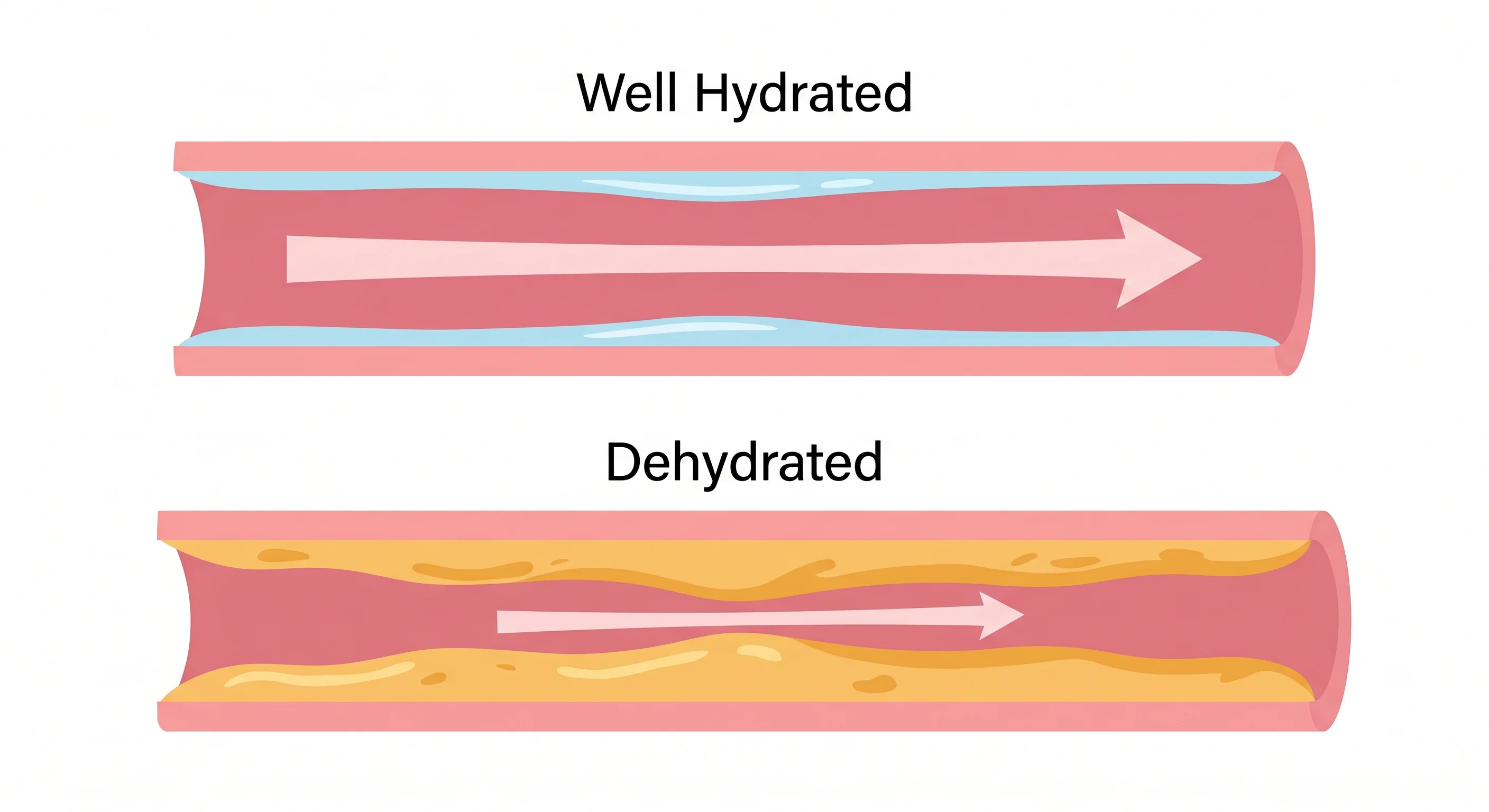
Here is the simple version. Your airways are lined with a thin layer of mucus. That mucus has one job: trap irritants and move them out. When you are well hydrated, that mucus stays thin and flows easily.
When you are dehydrated, the mucus thickens. Thick mucus is harder to clear. It sits in your airways, narrows the space air has to move through, and makes your chest feel heavy and tight.
Research suggests that fluid balance is associated with airway mucus consistency, and that poorer fluid status tends to coincide with worsened respiratory symptoms in people with asthma.
This is not a dramatic process. It happens gradually over hours. By the time you notice your breathing feels off, you may already be behind on fluids.
Airway tightening from thick mucus is different from an allergic response, but the result feels similar. That overlap is exactly why dehydration stays hidden. You blame the pollen. You never think about the two glasses of water you had all day.
Why Summer Heat Makes This So Much Worse
Summer is peak season for asthma flares, and heat plays a bigger role than most people realize. Your body sweats more in hot weather. You lose fluids faster. If you are not actively replacing them, you fall into a mild dehydration state without feeling thirsty.
Thirst is a late signal. By the time you feel thirsty, your body is already working to compensate. For someone with asthma, that lag matters.
Heat also raises outdoor ozone levels, which irritates the airways on its own. So in summer, you are often dealing with two problems at once: an environmental irritant and a body that is running low on fluids.
Research on asthma hospitalizations and heat exposure supports the idea that hot weather is a genuine respiratory stressor, not just an inconvenience.
If you have ever wondered why your asthma feels worse in summer, this combination is likely part of the answer.
.webp)
Practical Hydration Habits That Support Better Breathing
You do not need a complicated plan. You need a few small habits that are easy to keep.
- Start your morning with a full glass of water before coffee or tea. For some people, caffeine is mildly dehydrating, so front-loading fluids helps offset that.
- Set a midday check-in. Look at your water bottle. If it is still full at noon, drink half of it before you eat lunch.
- Carry water during outdoor activity. Heat and exercise both increase fluid loss. Do not wait until you feel thirsty.
- Notice your urine color. Pale yellow means you are doing well. Dark yellow is a sign to drink more.
- Eat water-rich foods. Cucumbers, watermelon, oranges, and leafy greens all contribute to your daily fluid intake.
These steps will not replace your prescribed medication. Hydration is a supportive habit, not a medical treatment. But staying well-hydrated is associated with easier mucus clearance in research on airway function, and that is worth taking seriously.
It is also worth noting that stress can tighten airways and disrupt breathing patterns. If you want to understand how emotional triggers layer on top of physical ones, does stress make asthma worse? is worth a read.
Track What's Actually Affecting Your Breathing
Knowing that dehydration matters is one thing. Seeing the pattern in your own data is another. That is where Respire LYF's Hydration feature comes in. It helps you log your daily fluid intake alongside your breathing patterns so you can spot associations over time. When you can see your hydration and your breathing side by side, the connection stops being abstract.
Your asthma triggers are personal. What tightens your airways may be different from what affects someone else. The only way to know for sure is to track consistently and look for patterns over days and weeks.
Start today. Log your water intake. Note how your breathing feels. Give yourself a few weeks of data. Small observations, repeated daily, add up to real insight.
[Download Free on the App Store →]
This article is for informational purposes only and does not constitute medical advice. Always consult your doctor or healthcare professional before making changes to your asthma or COPD management.