

COPD
COPD in Your 50s: What Changes and What You Can Still Control
Getting diagnosed with COPD in your 50s is a lot to absorb. Here's what's actually happening in your lungs, and the factors research shows you can still influence.
 By Respire LYF4 min read
In this article

Getting a COPD diagnosis in your 50s doesn't feel like what you expected. You're still working. You still have plans. And now a doctor is telling you your lungs have been losing ground for years — possibly decades — without you noticing. The frustration is completely valid. So is the question that follows: what does this actually mean for my life?
The answer is more nuanced than most people expect.
What's Actually Happening
COPD — Chronic Obstructive Pulmonary Disease — covers two related conditions: emphysema, where the tiny air sacs that transfer oxygen into your bloodstream lose their elasticity and affect COPD oxygen levels over time, and chronic bronchitis, where inflamed airways produce excess mucus that narrows airflow. In both cases, your lungs struggle to fully empty with each breath, which over time causes the breathlessness, fatigue, and persistent cough most patients recognize.
One reason a diagnosis in your 50s feels jarring is that the early stages of COPD develop silently. Most people don't notice symptoms until 40–50% of lung function is already gone. By the time breathlessness drives you to a doctor, significant change has already happened invisibly. And yes, you can have COPD without a prominent cough in the early stages, which is part of why it goes undetected for so long. That's not a reason for despair — it's context.
What You Can't Change
Understanding what causes COPD starts with acknowledging what's fixed. Genetics, childhood respiratory history, and cumulative exposure over decades all play a role. And what causes COPD besides smoking matters too — occupational dust, chemical fumes, indoor air pollution, and recurrent lung infections in childhood have all been linked to COPD in people who never smoked.
Acknowledging this is useful because it frees you to stop relitigating the past and focus your energy on what's actually modifiable.
And there's more of that than most people realize.
What Research Shows You Can Still Influence

Smoking cessation remains the single most impactful intervention for COPD at any age. It doesn't reverse damage, but it significantly slows the rate of further decline — the evidence here is clear.
Pulmonary rehabilitation — supervised exercise combining aerobic training, strength work, and breathing technique — reduces hospital admissions and improves exercise tolerance more effectively than most medication changes. Yet most patients are never referred, or don't follow through. It's one of the most underutilized tools in COPD management.
Inhaler technique and medication adherence matter more than most patients know. A significant proportion of people use inhalers for COPD incorrectly — often without realizing it — which undermines the COPD treatment and medications designed to protect them. Your pulmonologist can assess technique at your next visit; it's worth asking.
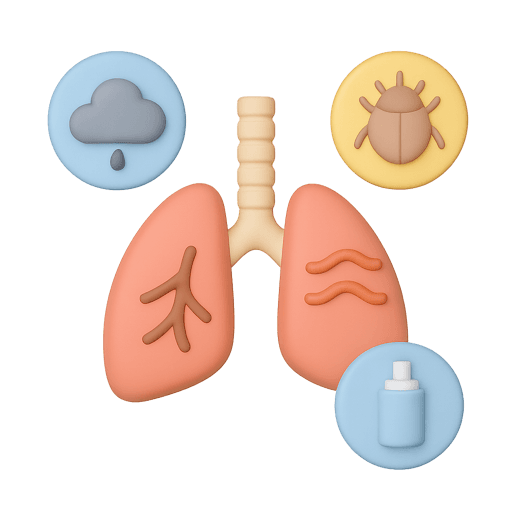
Your daily environment shapes your symptoms. Cold air, indoor air quality, humidity, and pollen all trigger airway changes in COPD patients. Knowing which environmental factors reliably correlate with your worst days is the difference between reacting to flares and anticipating them — and it's one of the most underappreciated aspects of how serious COPD management actually needs to be day to day.
Sleep and stress have measurable effects. Poor sleep increases systemic inflammation; chronic stress affects the immune response already involved in COPD pathology. These aren't soft lifestyle factors — they show up in real breathing outcomes, including COPD flare-ups that seem to come out of nowhere.
Being breathless with COPD isn't just a symptom — it's a signal. The challenge is that the factors driving it interact. A bad night of sleep, a stressful week, and a cold snap can combine to produce a flare that no single factor would trigger alone. Recognizing those patterns is one of the most valuable things a COPD patient can learn to do.
How Respire LYF Helps You Connect the Dots

This is exactly where most patients are on their own. Your doctor sees you for a few minutes at a time. Between visits, there's no system capturing what's actually happening day to day — which is what makes COPD home monitoring so valuable when it's done right.
Respire LYF brings cough, inhaler use, breathing scores, and connected or recorded peak-flow readings together with everyday factors such as sleep, food, and air quality. Find what your better and harder breathing days had in common. Put a practical step into your day, see what changes, and build on what helps.
Track What's Actually Affecting Your Breathing
A diagnosis in your 50s means you may be managing this condition for 30 or more years.
The patients who do best aren't simply following instructions — they're the ones who understand what's actually happening in their own lungs and act on it.
_________________________________________________________________________
 COPD
COPD