

You grab your rescue inhaler mid-attack, press down, breathe in, and feel absolutely nothing. No relief. Not even a hint of it. Just the same tight chest and a wave of panic because the one thing you were supposed to count on is not working. That moment is terrifying. And it happens to more people than you think.
Here is the good news: when your asthma inhaler is not working, the medication is rarely the first thing to blame. Most of the time, the fix is simpler than you expect. Let's walk through it together.
Why Your Inhaler May Not Be the Problem
Your rescue inhaler delivers medicine in a very specific way. The drug has to travel past your throat, through your airways, and reach the bronchial tubes where it does its job. If anything interrupts that path, you get little to no relief.
The inhaler itself is usually fine. What changes is how it gets used, especially under stress. When you are already struggling to breathe, your instincts work against you. You breathe too fast. You hold the inhaler at the wrong angle. You forgot to shake it. These are not personal failures. They are normal human responses to a frightening situation.
Research consistently shows that a large portion of patients use their inhalers incorrectly, even after being trained by a healthcare provider. Technique drift is real, and it affects almost everyone.
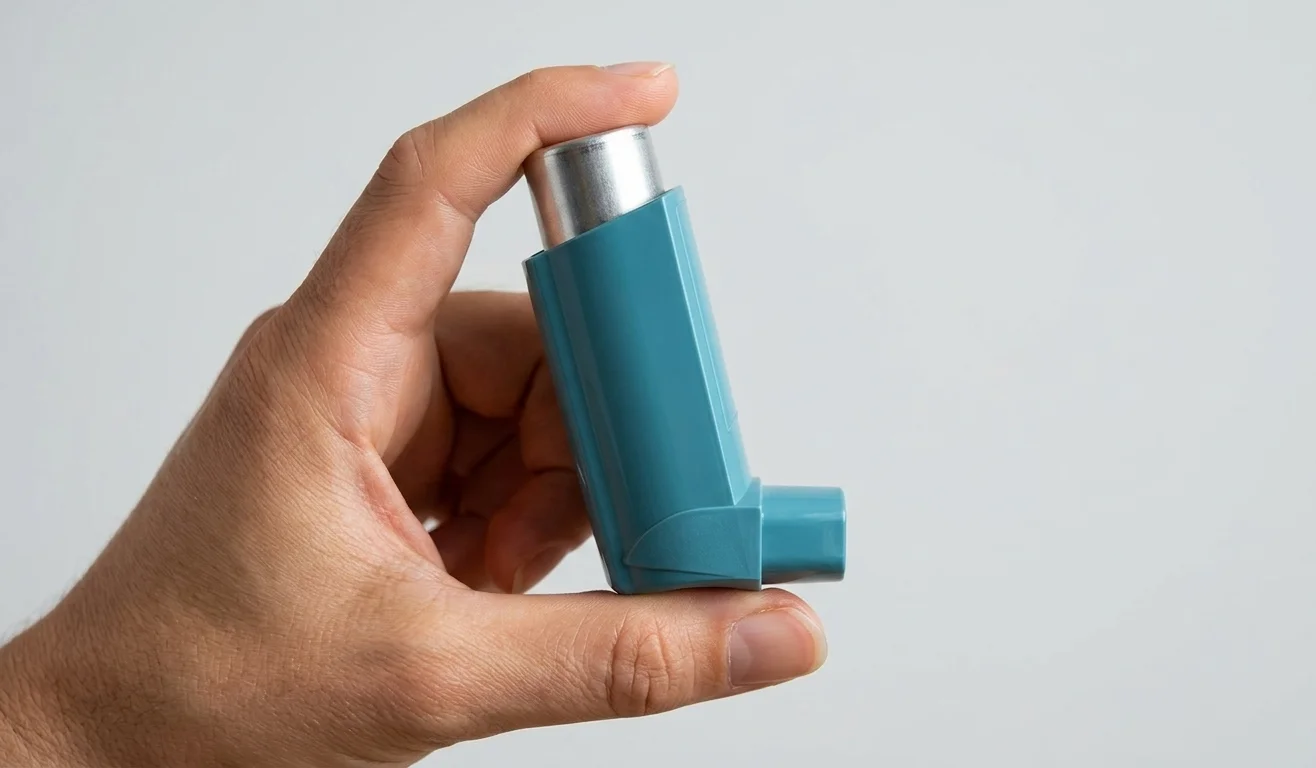
The 4 Technique Mistakes Most People Make Mid-Attack
Almost every technique error falls into one of these four categories.
- Inhaling too fast. This is the most common mistake. A fast, sharp breath pulls the medicine into your mouth and throat instead of your lungs. You need a slow, steady breath lasting about 4 to 5 seconds.
- Not shaking the inhaler first. The medicine and propellant separate when the inhaler sits still. Skipping the shake means you may inhale mostly propellant. Give it a firm shake for 5 seconds before every puff.
- Pressing and breathing at the wrong time. You need to press the canister down at the very start of your inhale, not before it and not after. Timing these together takes practice, especially when you are panicking.
- Not holding your breath afterward. After you inhale, hold your breath for 10 seconds. This gives the medicine time to settle into your airways. Most people exhale immediately and lose a significant portion of the dose.
Correcting any one of these is associated with better medication delivery. Correcting all four can make a real difference in how much relief you feel.
A Quick Self-Check You Can Do Right Now
If you are not in active distress right now, run through this check while you are calm. Practicing correct technique between attacks means your body remembers it when things get hard.
- Shake the inhaler for 5 full seconds.
- Breathe out completely before you bring the inhaler to your mouth.
- Seal your lips around the mouthpiece (or use a spacer if you have one).
- Start inhaling slowly, then press the canister down at the very beginning of that breath.
- Keep inhaling slowly for 4 to 5 seconds total.
- Hold your breath for 10 seconds.
- Wait 60 seconds before a second puff.
Spacer use tends to be associated with improved medication delivery in research settings, so if you do not own one, ask your pharmacist. They are inexpensive and widely available.
Also, check the basics: Is the canister empty? Shake it and listen for liquid. Is the mouthpiece blocked by debris? A quick look takes two seconds.
If you want to understand more about what else might be affecting your breathing, how to read your peak flow results is a good place to start.

When Correct Technique Still Is Not Enough: Signs to Call Your Doctor
Sometimes, technique is not the issue.
Research suggests that increased rescue inhaler use may be associated with worsening asthma control, which is worth discussing with your doctor.
If you are reaching for your inhaler more than twice a week, your current treatment plan may need a review.
Some research also suggests the body's response to bronchodilators may change with frequent use. This is worth raising with your doctor, not something to manage on your own.
You may also be dealing with a trigger you have not identified yet. Nighttime symptoms are a common sign that something environmental is at play. Our article on why asthma symptoms often feel worse at night covers the most common culprits.
At around this point in your asthma management, tracking patterns becomes more important than guessing. Respire LYF uses Apple Watch to notice patterns in your inhaler technique in real time, giving you feedback after each use so you can see how your technique is developing over time.
When to See a Doctor
If you are in acute distress right now, do not run a self-check. Call 911 or go to the nearest emergency room immediately. Warning signs that need urgent care include: your lips or fingernails turning blue or gray, your breathing getting faster and more labored despite using your inhaler, your neck or chest muscles visibly pulling inward with each breath, or you are unable to speak in full sentences. These are signs of a serious medical emergency. No technique correction replaces emergency care in these situations.
Track What's Actually Affecting Your Breathing

Your asthma inhaler not working is often a signal worth investigating, not just a bad day to push through. Tracking your symptoms, your inhaler use, your environment, and other lifestyle factors over time gives you and your doctor a clearer picture to discuss.
Patterns you cannot see in the moment become obvious when you look at a week of data. Respire LYF makes that tracking automatic, so you are not relying on memory during your next appointment.
[Download Free on the App Store →]
This article is for informational purposes only and does not constitute medical advice. Always consult your doctor or healthcare professional before making changes to your asthma or COPD management.