
Asthma affects over 262 million people worldwide. It's one of the most common chronic conditions on the planet—and one of the most frustrating to manage day-to-day.
If you or someone in your family lives with asthma, you know the reality: some days are good, some days aren't, and most of the time you can't explain why.
You've followed the advice. Taking the medications. Avoid the triggers you know about. And still, asthma finds a way to disrupt life—sometimes without warning.
This isn't a failure on your part. It's a gap in how asthma management has worked until now.
We built Respire LYF to close that gap.
The Reality of Living with Asthma
The numbers tell a difficult story.
75% of asthma patients report worse symptoms at night. Over 80% of people with poorly controlled asthma also struggle with poor sleep. Nearly half of all diagnosed patients experience at least one asthma attack every year. And between 50-80% of inhaler users make critical technique errors—often without realizing it.
These aren't just statistics. They represent millions of disrupted nights, worried parents, missed school days, and emergency room visits that might have been prevented.
Asthma is also expensive. Uncontrolled asthma is projected to cost the United States alone $300 billion over the next two decades—much of that from reactive care that kicks in after things have already gone wrong.
Despite all the medications and medical advances available today, daily asthma management remains a struggle for most people.
The question is, why?
The Gap in Asthma Management
Here's what most people don't realize: asthma symptoms are rarely caused by a single trigger.
That nighttime flare-up probably wasn't just the dust. It was the dust plus the late dinner plus the stress from work plus the fact that pollen was high and you slept poorly the night before.
Asthma is multi-factorial. Symptoms arise from combinations of triggers interacting in ways that are nearly impossible to track mentally.
Think about what it would take to truly understand what's driving your asthma. You'd need to remember what you ate over the past few days, cross-reference it with the weather, factor in your sleep quality, consider your stress levels, recall whether you took your controller medication on time, and connect all of that to how you're breathing today.
No one can do that reliably. Our brains simply aren't built for it.
And yet, that's exactly what we're asked to do. Every doctor's visit begins with the same question: "What were you doing when your symptoms got worse?" And every time, we piece together half-remembered details, doing our best to reconstruct something our memory was never designed to hold.
This is the gap. Asthma is driven by multiple factors, but the tools we've had only track one thing at a time—if they track anything at all.
Why Single-Factor Tracking Falls Short
Most digital tools for asthma focus on one dimension.
A medication reminder app helps you remember your pills—but it has no idea that you slept terribly last night. An air quality app tells you pollution is high—but it can't connect that to your personal asthma response. A symptom diary records how you feel—but it doesn't capture what you ate, your stress levels, or whether you used your inhaler correctly.
These tools aren't bad. They're just incomplete.
When your data lives in five different places, the connections between them stay invisible. You might notice that you feel worse on certain days, but you'll never see the three-factor combination that's actually causing it.
This fragmentation leads to guesswork. And guesswork leads to reactive management—waiting for symptoms to get bad before doing anything about them.
For parents managing a child's asthma, this is even harder. Kids can't always articulate what they're feeling. By the time you notice something's wrong, you're already in damage control mode.
Respire LYF changes this.
How Respire LYF Closes the Gap
Respire LYF is built on a simple truth: asthma is shaped by many factors, so tracking should be too.
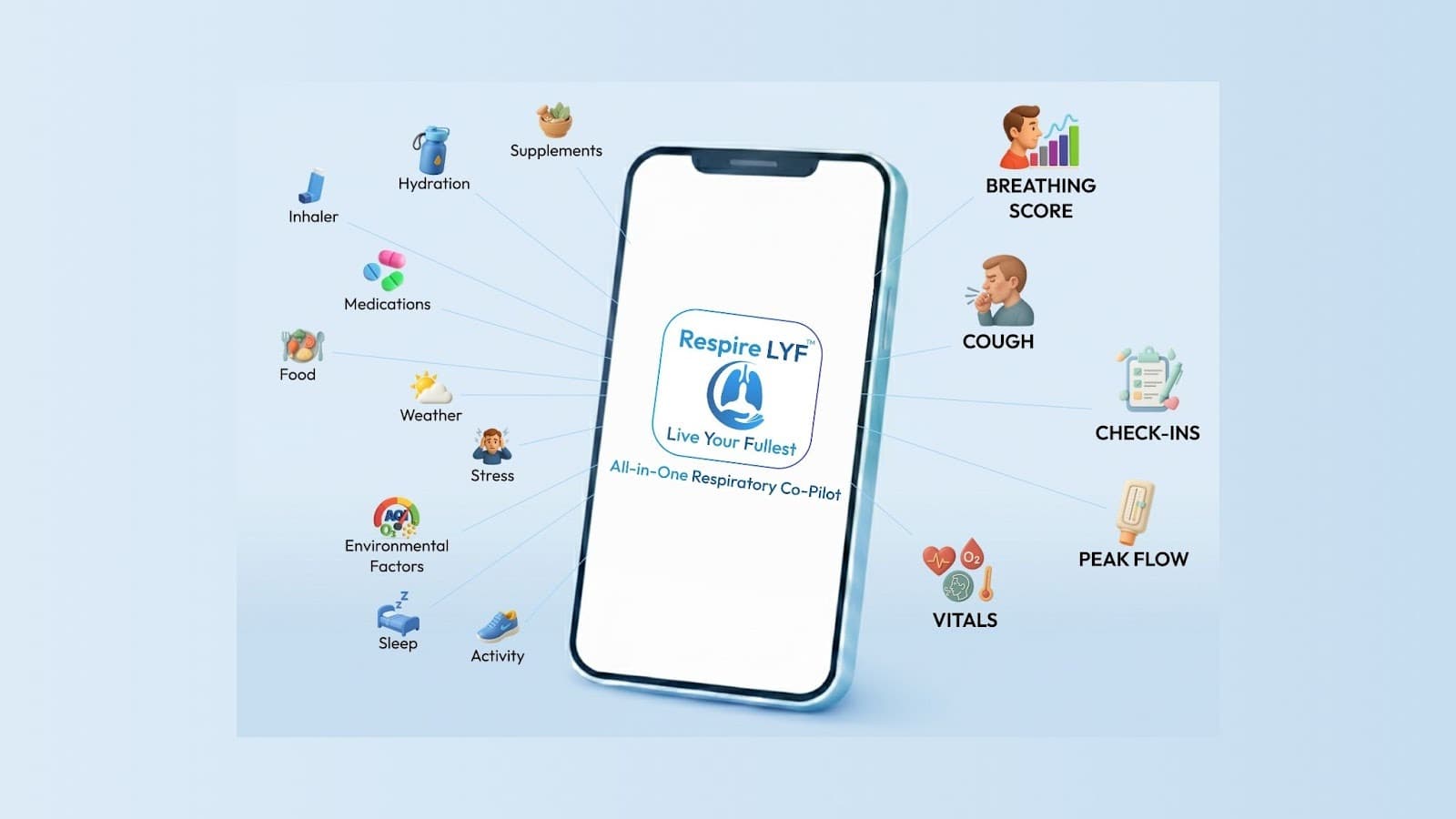
The app monitors 10 health determinants that research has linked to asthma outcomes. These include food and nutrition, hydration, sleep quality, weather conditions, environmental factors like air quality and pollen, physical activity, stress, supplements, medications, and inhaler technique.
It connects these inputs to 5 health indicators: your daily breathing score, weekly check-ins, automatically detected cough patterns, peak flow or spirometry readings, and vitals like SpO2 and respiratory rate from your smartwatch.
The real power comes from what happens next. Respire LYF's AI analyzes all of this data together—across days, weeks, and months—to find the patterns that matter most to your asthma.
Your Personal Asthma Fingerprint

Everyone's asthma is different. What triggers one person might not affect another at all. Generic advice like "avoid allergens" or "reduce stress" isn't wrong—it's just not specific enough to help you.
Your Personal Asthma Fingerprint is the unique pattern of factors that drive your symptoms. It's built from your own data, not population averages or internet tips.
Here's what discovering your fingerprint might look like:
Respire LYF might reveal that eating dairy after 8 PM combined with less than six hours of sleep increases your nighttime coughing significantly. It might show you that your best breathing days consistently follow mornings where you took a walk and got a full night's rest. It could tell you that cold weather combined with a missed evening controller dose leads to more rescue inhaler use. Or it might show you that the supplement you've been taking for months isn't making a measurable difference—freeing you to try something else.
These aren't guesses. They're patterns confirmed by your real data.
Once you see your fingerprint, asthma stops feeling random. You understand what's actually happening—and you can start making changes that matter.
From Day One: How Your Patterns Emerge
Respire LYF doesn't ask you to wait weeks before seeing value. Your Personal Asthma Fingerprint starts building the moment you begin tracking.
Here's how it unfolds:
- Daily Micro-Insights surface small, observational nudges based on your most recent data. These help you notice connections in real-time—like how last night's sleep might relate to this morning's breathing—without overwhelming you with information.
- Weekly Insights go deeper. Each week, the system identifies the one or two patterns that mattered most for your breathing during that period. Lifestyle factors and supplements are analyzed separately, so you get clear answers without noise or confusion.
- Monthly Insights consolidate what held up over time. They separate consistent patterns from one-off coincidences, showing you what truly persisted across the entire month.
- Monthly Reports bring everything together into a clear breathing story. They show how your weeks compared, why certain periods were better or worse, and what's worth carrying forward. These reports structure themselves for easy review—and you can share them with your doctor.
This layered approach means you're never drowning in data. Trends show what happened. Insights reveal what actually mattered. Reports help you understand what to do next.
What It Takes: About 2 Minutes a Day
One of the biggest barriers to consistent tracking is time. If it takes too long, people stop doing it.
Respire LYF is designed to fit into your life, not take over it.
Much of the tracking happens automatically. Cough detection runs passively on your iPhone or Apple Watch—no extra hardware needed, and no speech or conversations are ever recorded. The system pulls in weather, air quality, and pollen data based on your general location. Sleep and activity data sync from your Apple Watch or the Health app.
The rest takes about two minutes. A quick symptom rating. A food log via photo or voice. A brief stress check-in. Supplements and hydration.
You don't have to track everything perfectly. Start with what matters most to you, and Respire LYF adapts. The more you share, the sharper your insights become—but even minimal tracking reveals patterns you'd never catch on your own.
We built it this way on purpose. Asthma management shouldn't feel like another burden.
Better Doctor Visits, Stronger Partnerships
Managing asthma isn't something you do alone. Your doctor is a critical partner—but that partnership only works when both sides have good information.
Think about your last appointment. How much time did you try to remember what happened since your previous visit? How confident were you in the details you shared?
Respire LYF changes this. Instead of trying to remember the past, you come in with a clear picture of what has happened. You have information about symptom trends.
You also have data on correlations found by the app. There are patterns of medication adherence. Additionally, you have details about your best and worst times.
Your doctor gets context they'd never have otherwise. Conversations become more focused and more productive.
That's the kind of partnership that leads to better outcomes.
For Families Managing Asthma
Respire LYF is made for people aged 13 and up. This means it helps teens with asthma and parents who want to stay informed and supportive.
For teens, Respire LYF means not having to explain everything to everyone. You can see your own patterns. You can understand what affects your breathing. You can make decisions based on real data, not guesses or general advice.
You can find answers in your data. This helps you understand why practice was harder on some days. It also explains those tough mornings.
For parents, Respire LYF offers visibility without having to constantly ask questions. Automatic cough detection and environmental tracking fill in the gaps. Over time, you will notice patterns forming. This makes it easier to have informed talks and spot potential flare-ups early as a team.
From Reactive to Proactive
The biggest shift Respire LYF enables is moving from reactive to proactive asthma management.
Reactive means waiting for symptoms to get bad, then responding. It means rescue inhalers, urgent care visits, and disrupted plans. It means always being one step behind.
Proactive means seeing the pattern before the flare-up. It means knowing that tonight's conditions match the combination that triggered problems last month—and doing something about it before symptoms start.
This shift doesn't just improve daily quality of life. It can reduce emergency visits, cut down on hospitalizations, and lower the long-term costs of managing asthma.
For kids, it means fewer missed school days. For adults, fewer missed workdays. For everyone, less anxiety and more control.
The Bottom Line
Asthma management has been stuck in the same place for too long—fragmented tools, incomplete data, and endless guesswork.
Respire LYF offers something different.
By tracking the 10 determinants that shape your asthma and connecting them to 5 real health indicators, we help you discover your Personal Asthma Fingerprint—the unique pattern that explains why some days are good and others aren't.
This isn't about replacing your doctor or your medications. It's about finally having the full picture—so you can make informed decisions, have better conversations with your care team, and take control of your asthma in a way that wasn't possible before.
Over 262 million people live with asthma. If you're one of them—or if you're caring for someone who is—you don't have to keep guessing.
We're here to help you see the patterns and breathe easier.
Discover your Personal Asthma Fingerprint with Respire LYF.
Respire LYF is a wellness product for informational purposes. It does not diagnose, treat, or cure any condition. Always consult your healthcare provider for medical decisions.
Trusted resources: